The Sky Is Changing: Why Airlines That Ignore AI Will Be Left on the Tarmac
Aviation has always been an industry of innovation. From the first jet engines that shrank the globe to the computerized booking systems that democratized travel, the skies have been the staging ground for humanity's most ambitious technological leaps. But today, a new wave of technology is reshaping the heavens—one that is driven not by mechanical parts, but by neural networks and silicon. Artificial Intelligence is no longer a futuristic concept; it is the new operating system of the modern airline.
As we move deeper into 2026, the industry faces a critical choice: embrace this AI-driven transformation or watch as competitors soar ahead. The consequences of ignoring these emerging technologies are no longer theoretical—they are existential. This isn't just about an upgrade; it's about a complete reckoning of how airlines operate, compete, and survive in an increasingly intelligent world.
Technologies Reshaping the Passenger Journey
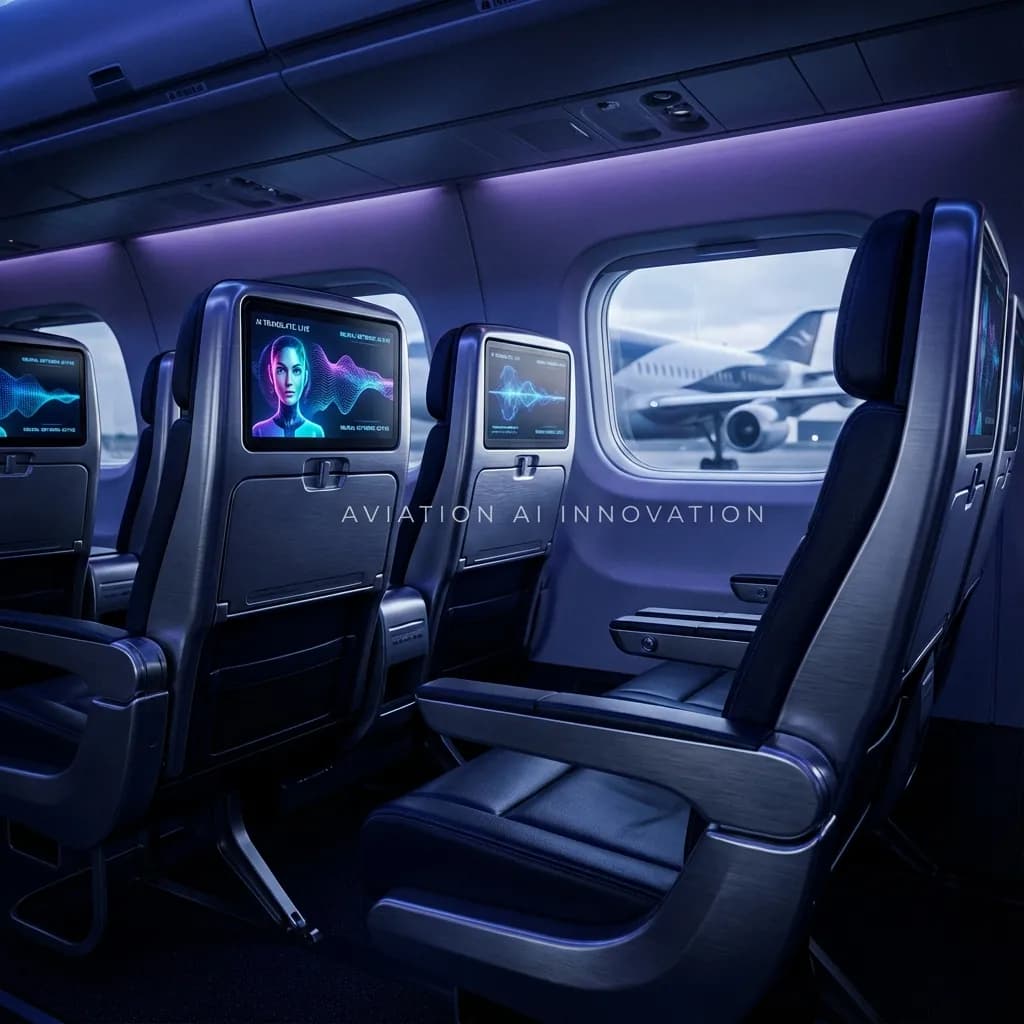
The modern passenger journey is being reimagined from the ground up (and into the clouds). Nexora and other leading AI platforms are transforming passive aircraft cabins into sentient, responsive environments. One of the most visible changes is in AI-Powered In-Flight Entertainment (IFE). Highly personalized content recommendations, real-time language translation, and live captions are becoming the gold standard. Furthermore, sign language avatars for accessibility ensure that inclusivity is built into the core experience, not just tacked on as an afterthought.
Behind the scenes, Edge AI and Offline Intelligence are solving the industry's historical reliance on fragile satellite connections. By processing AI locally on the aircraft, airlines can achieve sub-2-second response times at 35,000 feet, even in total connectivity dead zones. This shift and the resulting reduction in bandwidth requirements translate directly into mission-critical reliability and massive cost savings.
Beyond the cabin, Predictive Maintenance and Operations are optimizing fuel consumption and reducing the delays that plague traditional carriers. Biometric travel paths from curb to gate, and Ancillary Revenue AI that predicts exactly what a passenger might want to purchase and when, are creating new streams of high-margin revenue that were previously inaccessible.
The Cost of Resistance: What Happens When Airlines Say "Not Yet"
The decision to "wait and see" carries a heavy price tag. Perhaps most urgent is the Regulatory Non-Compliance risk. The FAA/DOT accessibility mandates for real-time captioning carry a strictly enforced September 2028 deadline. Airlines without a solution by then face significant fines and legal action. Scrambling at the last minute often leads to inadequate, expensive patches that frustrate passengers and complicate technical stacks.
Moreover, there is a profound Competitive Disadvantage. Passengers, particularly premium travelers, now choose airlines based on the quality of the "digital cabin." Those who offer AI-enhanced personalization capture lifelong loyalty, while those who resist become "commodity carriers," forced to compete solely on price in a race to the bottom. This leads to massive Revenue Leakage; with the global IFEC market projected to reach $148.4B by 2031, missing out on smart, AI-driven commerce means losing millions in potential ancillaries annually.
Operational inefficiency, talent stagnation, and a culture that resists change create "organizational debt" that becomes harder to pay off the longer you wait. History is littered with "dinosaurs" who ignored digital booking or mobile apps; the parallel to Blockbuster vs. Netflix in the aviation space is becoming increasingly clear.
The Opportunity Cost: What Early Adopters Are Gaining
While the laggards struggle, early adopters are reaping the rewards. First-mover advantages are real; building deep AI capabilities takes time, and starting now allows these returns to compound. They are setting the industry standards rather than desperately trying to follow them. This leads to significantly higher Passenger Loyalty and Net Promoter Scores (NPS), as delightful, personalized experiences generate powerful word-of-mouth marketing.
From a financial perspective, airlines integrated with AI see a 15-30% lift in ancillary revenue. When combined with zero-upfront-cost models like Nexora's, the barrier to entry vanishes, leaving only the upside. These systems also build Operational Resilience, ensuring a consistent passenger experience regardless of the route or satellite outages.
How to Begin Your AI Transformation
The path forward doesn't require a total overhaul overnight. Start with High-Impact, Low-Risk Wins. Address accessibility compliance first—it's mandatory, and it demonstrates immediate value. Choose partners who understand Edge Processing and can integrate with your existing IFE hardware without requiring expensive airframe modifications.
Think in terms of Platforms, Not Point Solutions. Avoid siloed AI tools that don't talk to each other and instead look for a "neural core" that can scale. Build internal champions and set measurable KPIs for your AI initiatives to ensure that innovation moves from the lab into the live cabin.
Conclusion: Lead or Follow
The aviation industry has always rewarded those who have the courage to embrace the future. Today's emerging technologies—AI, edge computing, and extreme personalization—are no longer optional upgrades; they are the foundation of tomorrow's profitable airlines. Those that resist will find themselves non-compliant, uncompetitive, and ultimately grounded. The question isn't whether to adopt AI—it's whether you'll lead the transformation or be forced to follow it. The sky belongs to those ready to innovate.
Ready to take control of your AI future?
Schedule a technical deep dive with the Nexora team to see how our edge-native intelligence can transform your fleet.
Book an Executive Demo